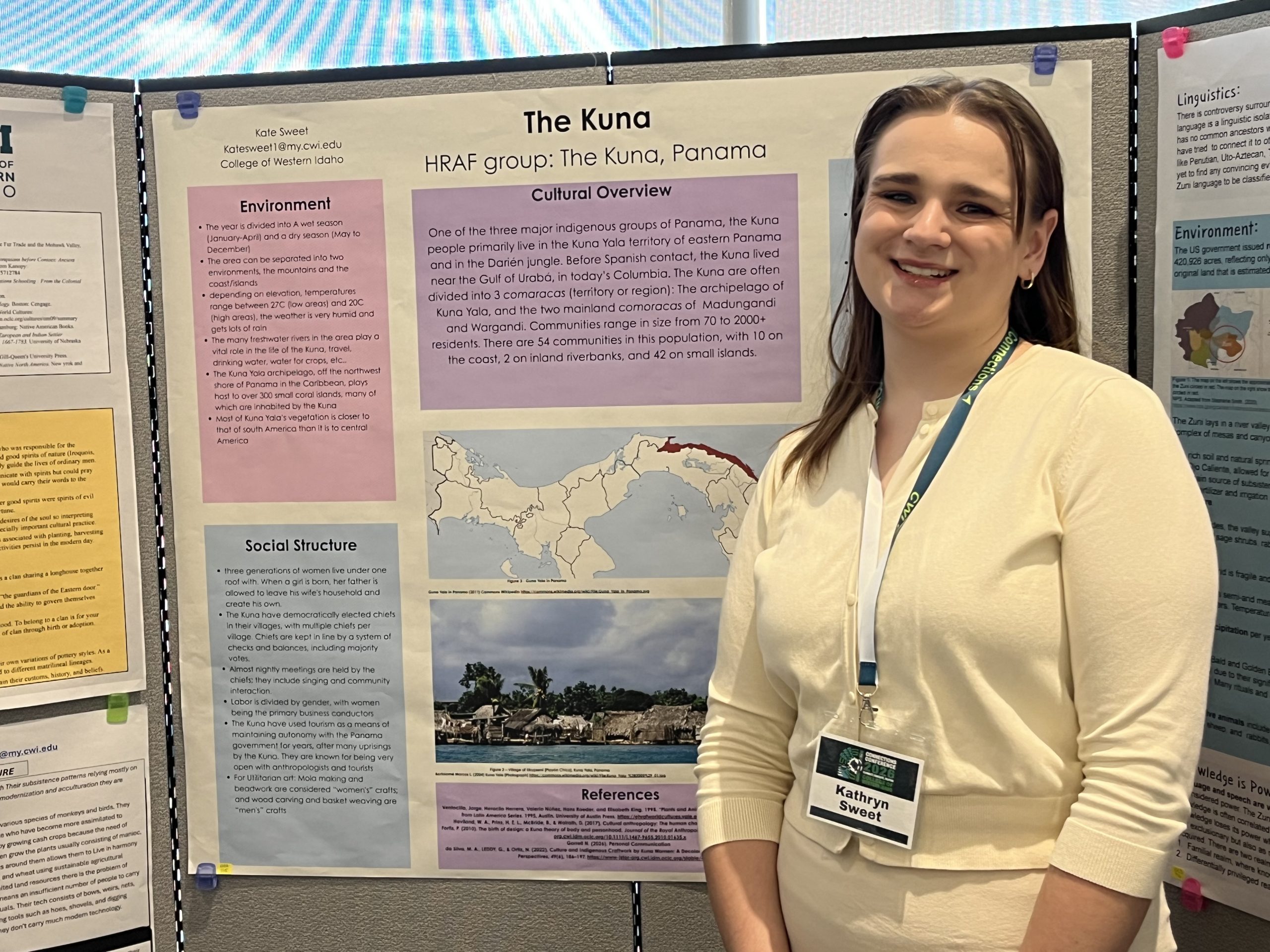
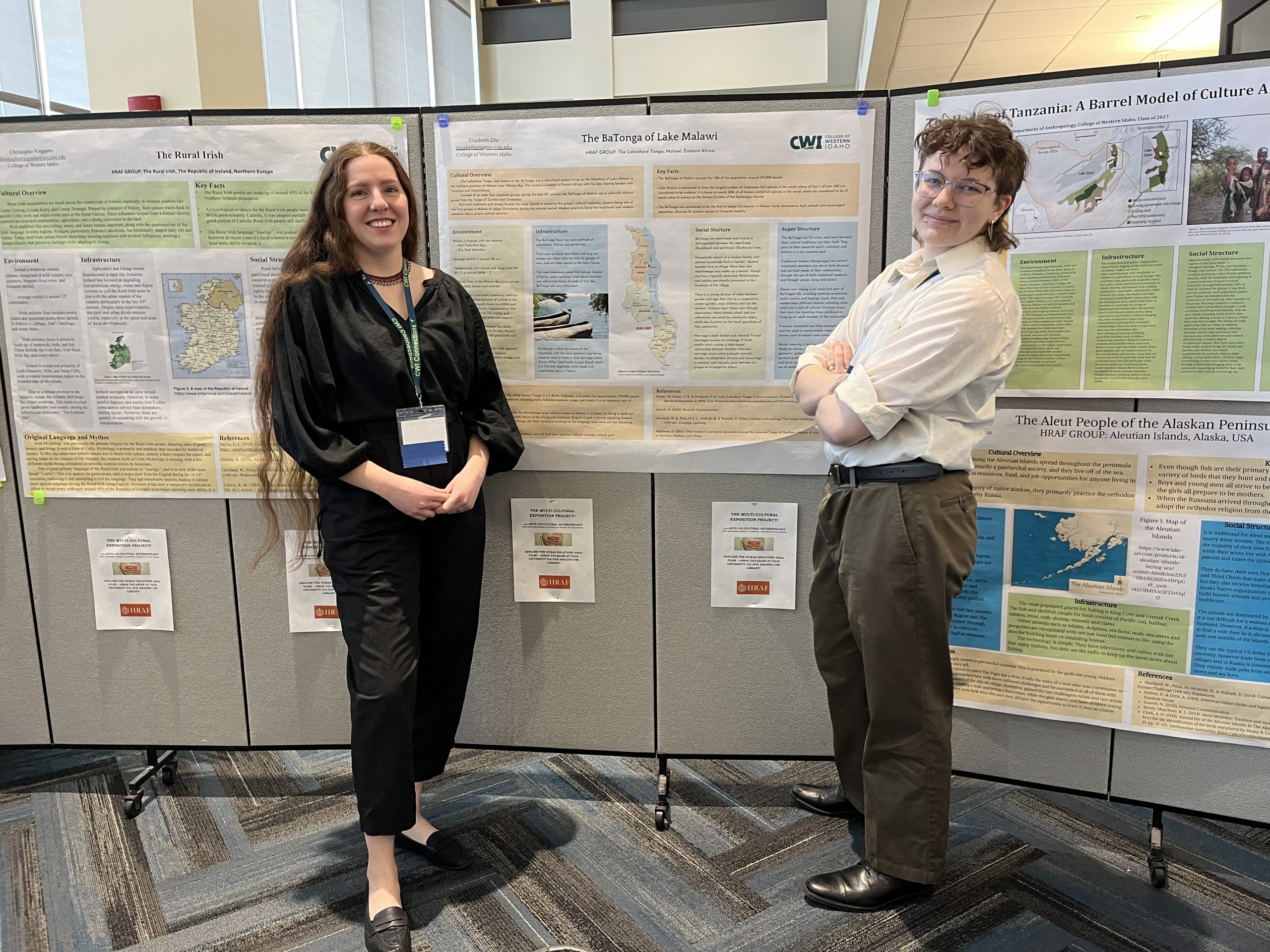
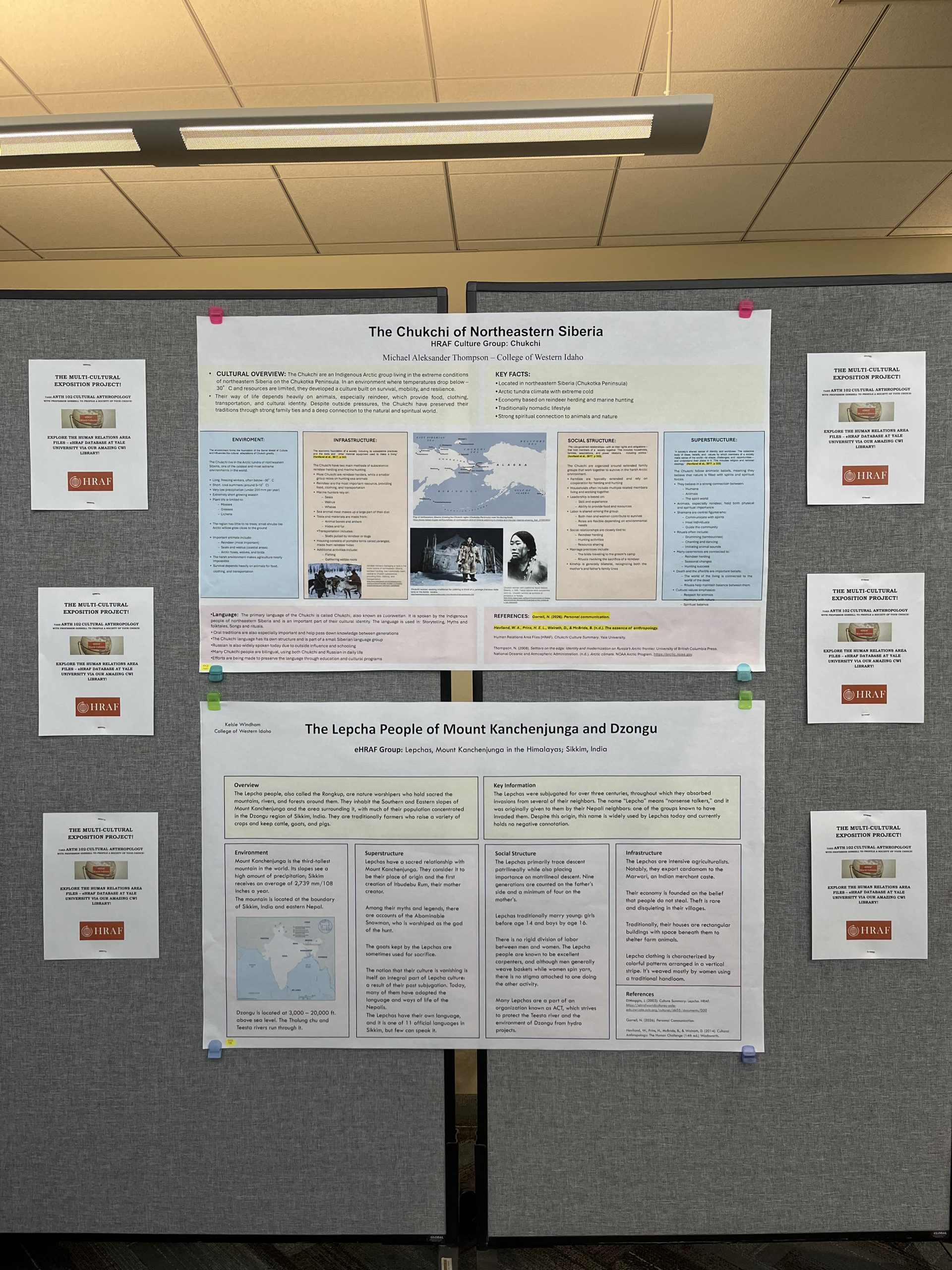
Professor Nikki Gorrell at the College of Western Idaho (CWI) recently received an Innovation in Action Award for Creative and Interdisciplinary Expression from the college’s Center for Teaching and Learning. In addition, two of her students won top awards for their eHRAF posters at the Connections Conference. 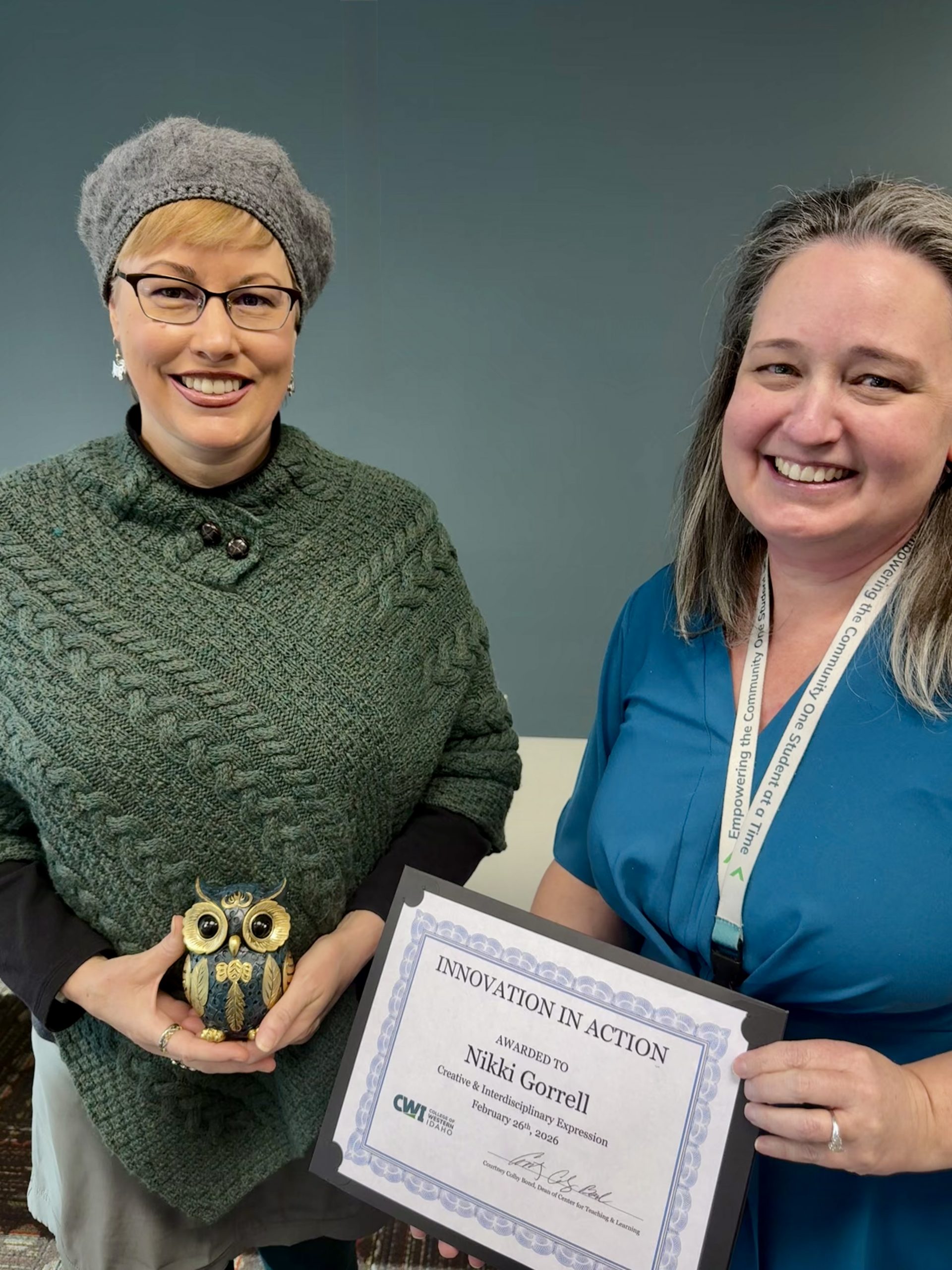
Professor Gorrell reports that students enjoy immersing themselves researching a cultural group of personal interest. Students even have the option to research their own ancestral roots if the group is featured in the database. This in-depth project appeals to majors and non-majors alike, while also highlighting the incredible cultural diversity of humanity as exemplified in the eHRAF World Cultures database.
Students enrolled in ANTH 102 Cultural Anthropology, an introductory course, have the opportunity for virtual fieldwork researching a society of their choice utilizing the eHRAF World Cultures database for the Multi-Cultural Exposition Project. Over three months, students explore the largest ethnographic database in the world via the CWI Library and are guided through the process of “seeing through the lens of Anthropology.” Students gain experience with the database and research additional anthropological books and journals to assemble a unique Barrel Model of Culture (BMC) outline with a holistic overview of the society they chose.


The Culture Summary feature in eHRAF World Cultures is the starting point of the project. An Anthropology student intern is integral to the project and provides invaluable peer support and feedback as students acclimatize to the eHRAF database and learn how to apply the Culture Summary and other resources to create a BMC outline which will form the foundation of their poster or display. The Peer-to-Peer Mentor is an Anthropology major who has excelled in this project the previous semester and demonstrated fluency navigating eHRAF.
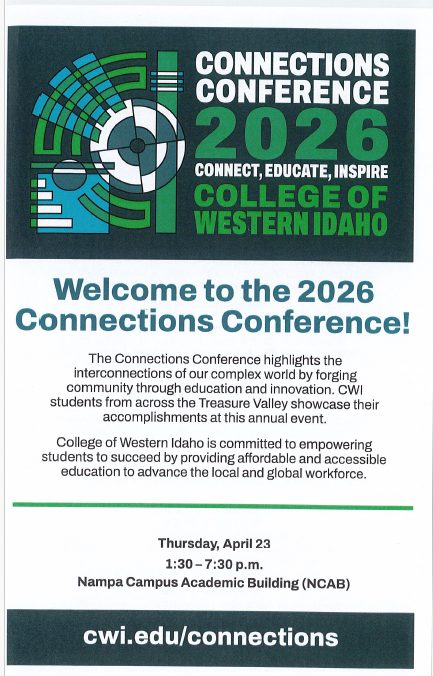
My Perspective as a Peer-to-Peer Mentor by Kellan Brown
“As Professor Gorrell’s student intern this semester, my primary job has been to support students in her Cultural Anthropology 102 class as they work through their Multi-Cultural Exposition Project. Students are required to research a cultural group represented in the HRAF World Cultures database and generate a holistic outline of their given culture. While I have personal experience using eHRAF, helping students with their projects offered a new perspective on the value it brings. To start, eHRAF collects decades of ethnographic material specific to a particular group and consolidates it in its specific culture section. The number of documents included for each group is clearly presented, which has been a helpful indicator for many students of how well studied their potential group might be. Simply being able to see the number of attached documents has saved numerous students from the challenge of researching a relatively undocumented group. Additionally, I have found that many students appreciate the culture summaries themselves, as they are clear and well written, and cite the sources that the information was derived from, facilitating further exploration of a given topic. As a student intern, the HRAF is easy to navigate, and I enjoy helping other students familiarize themselves with it, because once they do, they then have access to an incredibly valuable resource that can be applied to research across Anthropology and other Social Sciences.”
The Multi-Cultural Exposition Project Workflow for a 16-Week Course
-
- Part One: Students explore the HRAF World Cultures database and choose a unique group on a first come basis. Groups cannot be state-level societies or historic societies. Once they have confirmed their group, they are responsible for scheduling a meeting with the CWI Anthropology-liaison Librarian (valued at 25 points) and the Peer-to-Peer Mentor (valued at 25 points) on a four-week timeframe while learning about anthropological field work, the creation of ethnographies, and practice creating Barrel Models of Culture on HRAF groups in class.
- Part Two: They then work over another four weeks to create an extensive (8-10 pages) Barrel Model of Culture Outline based on the HRAF Culture Summary and other recommended and required resources obtained from the CWI Library. After a workshop session in class, they submit it for review and feedback by email to the Peer-to-Peer Mentor or via a Discussion Forum in Canvas if they are online (50 points).
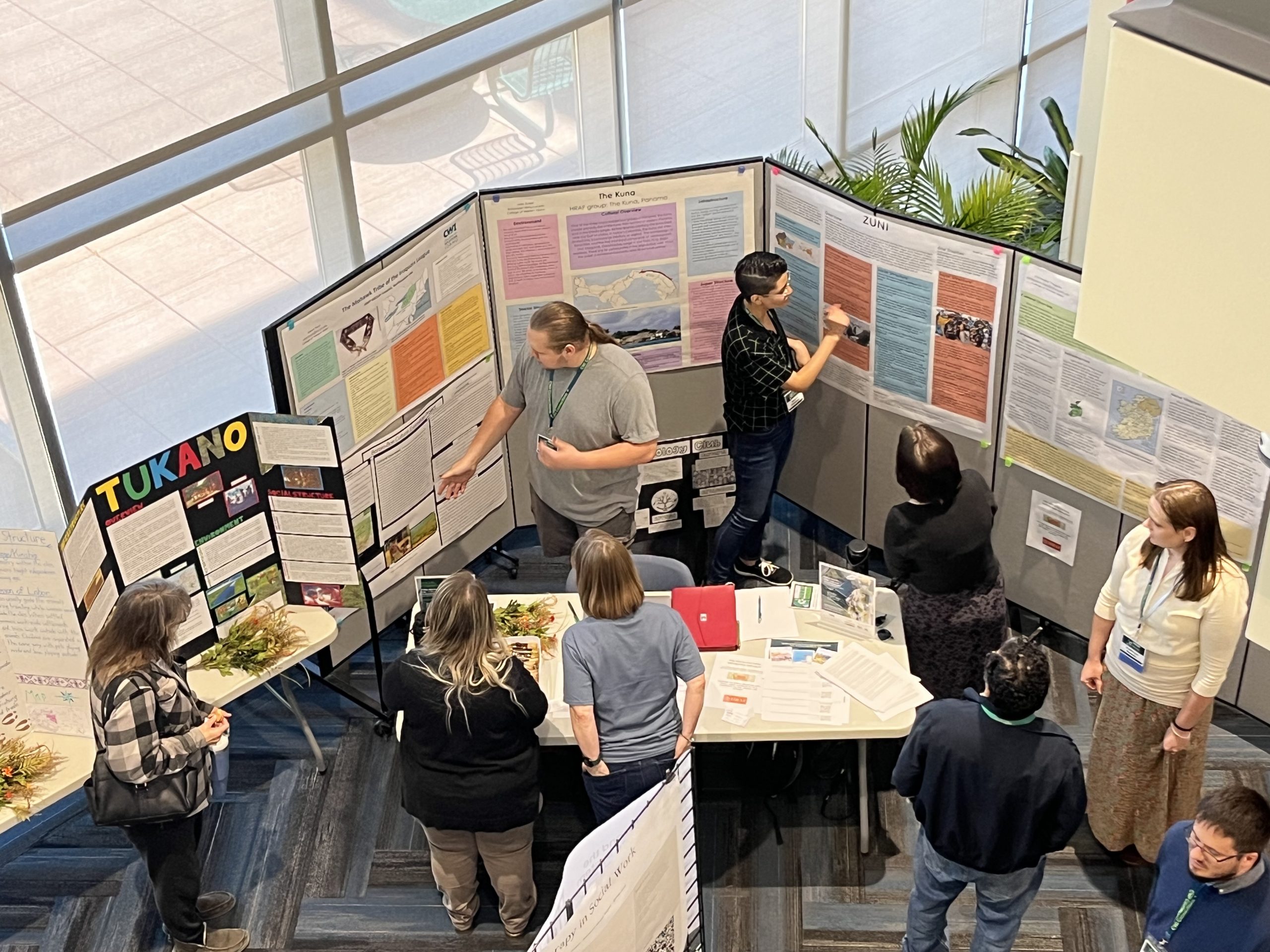
- Part Three: Using a synthesized BMC outline, students create posters, required if they are ANTH majors, or tri-fold panels, and present their virtual fieldwork to their peers at the Multi-Cultural Exposition Project in class (50 points). This event simulates a poster session at an Anthropology conference and is a highlight of the semester taking place in late November or late April. Every Spring, College of Western Idaho hosts the Connections Conference. An opportunity for students to showcase their work to the wider campus community, gain experience articulating their process, and build confidence in their communication skills. Total Points: 150
The Multi-Cultural Exposition Project has been integrated into the Connections Conference to great success.
Multi-Cultural Exposition Project Requirements as Outlined in Canvas
- Barrel Model of Culture Outline
-
- FIVE physical textbooks and/or e-books must in included in References with a total of TEN References required.
-
-
- References must include: the HRAF database Culture Summary, Cultural Anthropology: The Human Challenge by Haviland et al, Professor Gorrell’s lecture, at least one JSTOR article, and at least one map.
- References must follow APA formatting. Inquire at the Writing Center for assistance.
-
-
- Content Requirements for Posters and Tri-Fold Displays:
- Cultural Overview
- All layers of the BMC represented
- Reference box that includes the HRAF Database, Cultural Anthropology: The Human Challenge by Haviland et al, and Professor Gorrell at minimum.
- At least one map showing the group’s region/location
- Wisely chosen images (no more than four including the map)
- Content Requirements for Posters and Tri-Fold Displays:
-
-
- Poster Requirements:
-
-
-
-
- Format to 42” wide x 36” in height
- No solid dark colors as background
- Save in Landscape mode as a PDF
-
-
-
- Tri-Fold Requirements:
-
- Tri-Folds must measure 36″ height x 48″ wide.
- The majority of the written information must be typed and printed
-
ANTH 102 STUDENT INTERVIEWS AND TESTIMONIALS
“The HRAF database, proves to be a powerful tool for anthropology students of all academic backgrounds. It organizes scholarly articles on societies that might otherwise take hours to find into a uniform database, and even provides a Culture Summary of every society, past and present, suitable to apply to the Barrel Model of Culture or other ways of cultural classification. I found it really helpful to be able to see the cultures on a map. The well-structured database allows us to easily see the date and source of references, and finally the sheer quality and quantity of information at our fingertips.” Chris R.
“The HRAF database was an essential tool in the development of my Multi-Cultural Exposition Project tri-fold display. The database provides organized, reliable, and deep cultural information about a large variety of societies. When choosing a group, the option of the map used to browse geographically was especially helpful and allowed me to follow my Professor’s advice on choosing a group by region. In the description section, the external links guided my research further by leading me to additional sources that expanded my understanding of specific aspects of the culture. The summary section was where I found most of the core information for my project; its clear organization made the content easier to understand and also was the starting point to explore more detailed aspects of the society. Finally, the documents section was very useful because the abstracts helped me identify relevant books, which I was then able to request from the CWI Library to support my research. In conclusion, the HRAF database made the entire research process more efficient, structured, and insightful.” Mariana R.
“The HRAF database not only provides a wealth of information for those participating in this project, but also a preview into the scholarly articles and schools of thought that both current and prospective anthropology students can use to gain insight into the field. The HRAF’s Culture Summaries are organized in a way that flows with the Barrel Model of Culture and by extension the Multi-Cultural Exposition Project. This was more than just an excellent start into the world of anthropology research for our project, but also a visual representation of the Barrel Model in action and a resource for answering any student’s most dreaded question: ‘Where and how do I find the information I need?’” Kate S.
“Coming to CWI as an anthropology major, I was excited to access resources that I wouldn’t have outside of a college setting. In my first semester, I took Cultural Anthropology 102 with Professor Nikki Gorrell, which was highlighted by our Multi-Cultural Exposition Project. The project was made up of two parts: a holistic outline of a chosen group located in the HRAF (guided by the Barrel Model of Culture methodology), followed by a presentation of the findings in the form of a poster or tri-fold display. Professor Gorrell encouraged us to research a group that interested us and introduced the class to the HRAF World Cultures database, which would be used to find a group of our choice and locate valuable sources. I came to college with the hopes of accessing resources I wouldn’t be able to otherwise, and the eHRAF database serves as a great example. Since using the eHRAF last semester, I have used it for other research projects and frequently turn to it when I want to explore a given culture. The database is well organized and facilitates streamlined research. I’ve personally found the various ways to search for a culture group, whether by the name search or using the map, to be incredibly helpful. In particular, the map feature allows me to search for cultures within a geographical area, which has been especially helpful for me. Additionally, the specific cultural sections are well organized and easy to interpret. I’ve found the structure and quality of the Culture Summaries to be consistent throughout the database, allowing for quick research. Additionally, the HRAF consolidates ethnographic research into a single space, saving immense amounts of time that can be repurposed towards additional research. Ultimately, the HRAF has been an invaluable resource to me so far in my college career, and I plan to continue to utilize it as I continue on my degree path.” Kellan B.