HRAF Global Scholar: Nora Franco
Title: Professor
University Affiliation: University of Buenos Aires, Argentina
Research Topic: The use of lithics and other artifacts in different societies
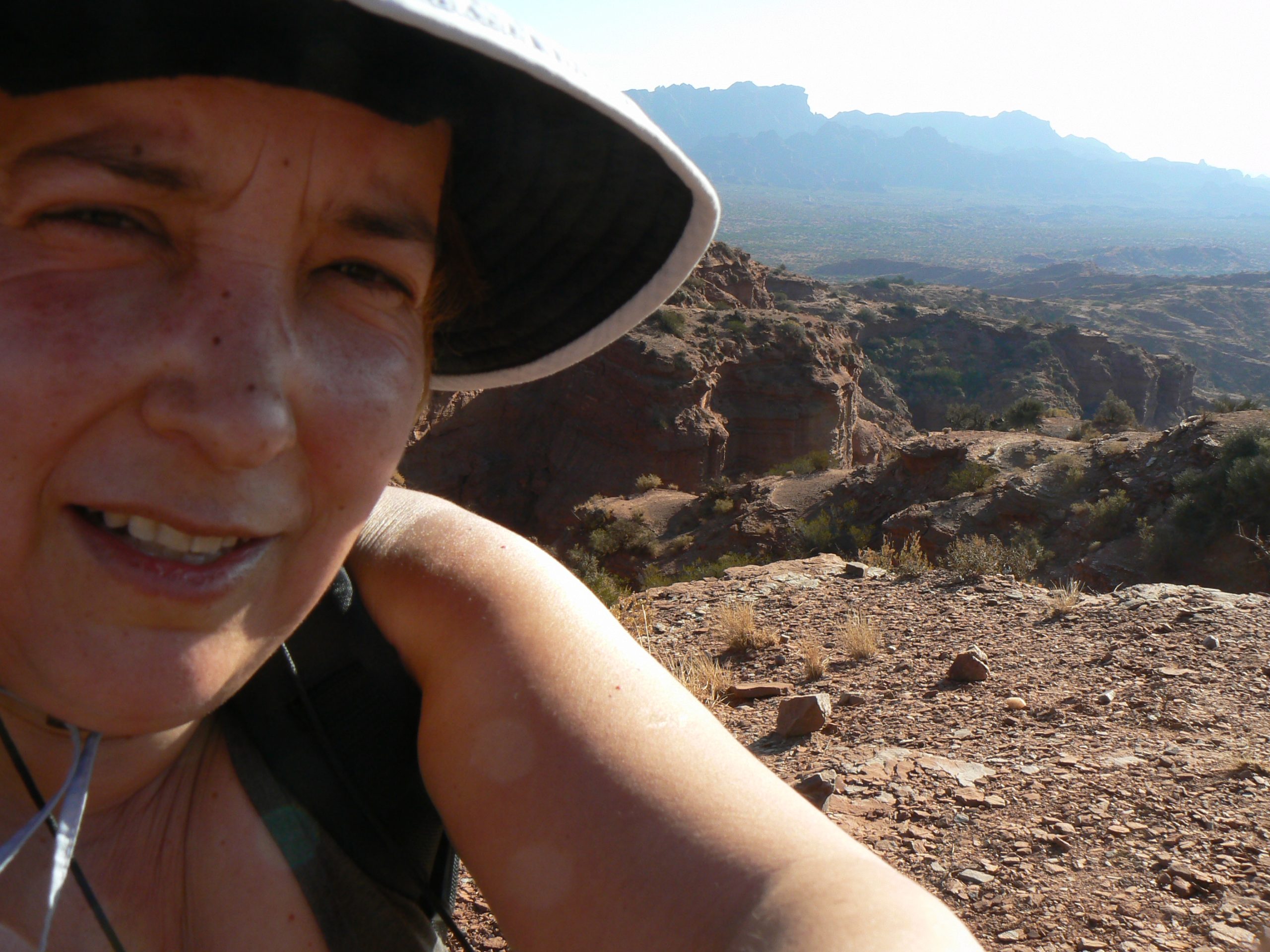
HRAF Global Scholar Nora Franco is a professor at the University of Buenos Aires in Argentina. She is also the principal investigator at CONICET. The National Scientific and Technical Research Council (Consejo Nacional de Investigaciones Científicas y Técnicas or CONICET) is an Argentine government agency which directs and co-ordinates most of the scientific and technical research done in universities and institutes. Professor Franco describes her research topic as follows:
My project seeks to obtain additional information on the use of lithics and other artifacts in different societies, as well as to understand the reason for the variations found, including both natural and cultural ones. I believe this is a topic that has not received enough attention and has a great potential for archeology. I plan to apply the knowledge obtained in archaeological projects in Patagonia, and to incorporate them scientific talks and papers, as well as in courses at the University of Buenos Aires and outreach activities.
The results of the technological analysis that Professor Franco carried out in South Patagonia suggest that the differences found in the archaeological record between 4,000 and 1,000 years BP are not related to ecological reasons – different raw materials, fauna or plants availability – but rather to the presence of different cultural groups north and south of the Santa Cruz River. This river, which runs in a West–East direction, from the Andes to the Atlantic coast, appears to have been a cultural boundary during at that time. Differences found between the North and South of the basin are related to the technological methods used, the ways in which people buried their deaths and the way in which pigment was applied. On the contrary, similarities have been found in cultural practices between the south of the Santa Cruz river basin and the Magellan Strait, in spaces located at more than 250 km. In addition, information available supports the existence of similar genetic groups in this southern space. The existence of variations due to cultural reasons has not been explored in depth in recent years in Patagonia due to the influence of New Archaeology and the discredit of previous archaeological theories. In this case, ecological reasons have already been considered and discarded for explaining the variation found. The recognition of this pattern is probably due to low demography in the south of Patagonia.
Professor Franco believes that there were occasional contacts between groups living north and south of the basin, as recent studies of art motifs and techniques suggest. She became a HRAF Global Scholar in order to have access to eHRAF cultural records to explore in greater depth information about cultural transmission and residence patterns, gender and children’s roles in technology, responses to resource scarcity and risks, and the dynamics related to contact between different groups. Professor Franco has experience working with ethnoarchaeological and ethnographic sources and believes there is still a lot we can learn from them. Information obtained is being integrated into ongoing research and shared with the members of the team that she leads. This information is also enriching the courses she teaches at the University of Buenos Aires, specifically “Models in Archaeology,” where ethnoarchaeology has an important role. The use of eHRAF records strengthens both research and teaching, contributing to a better understanding of cultural diversity in Patagonia.
HRAF is honored to feature Nora Franco as one of our HRAF Global Scholars for 2026. We wish her continued success with her research.
To support funding priorities such as the HRAF Global Scholars program and the development of our open access resources (Explaining Human Culture, Teaching eHRAF, and Introducing Cross-Cultural Research), please consider making a tax-deductible donation.